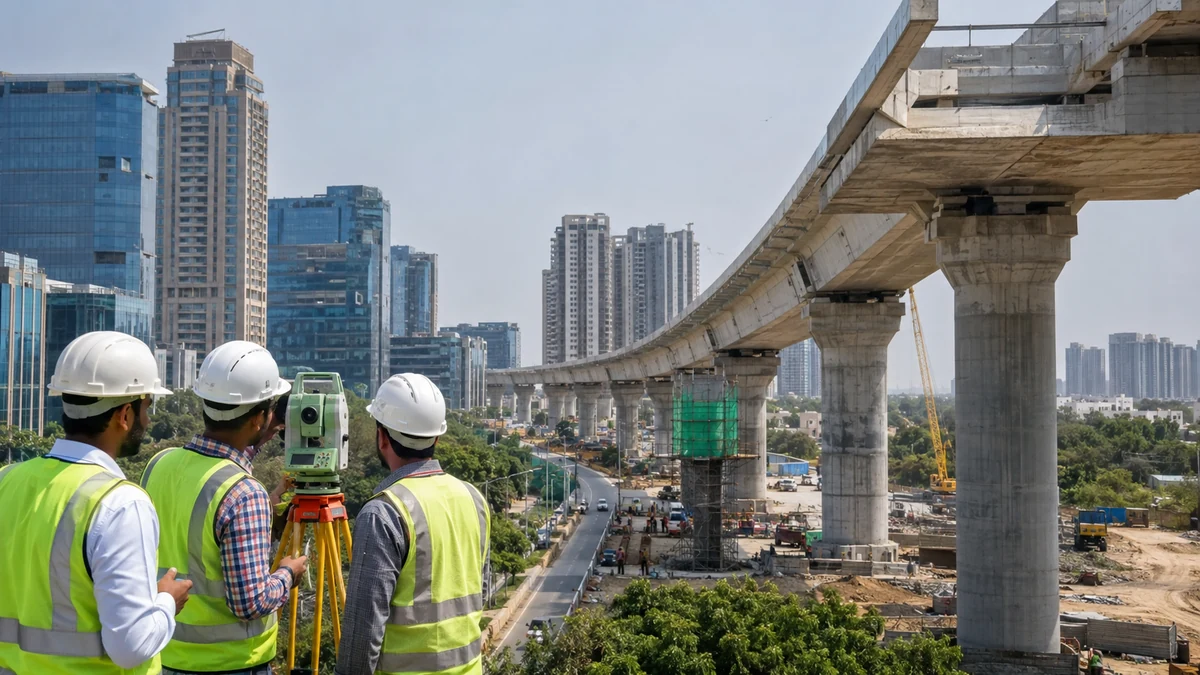
Haryana leadership to evaluate the Detailed Project Report for the new metro link, set to transform connectivity across key commercial and residential zones.
A defining moment is nearing for Gurgaon’s mass transit future as the 35.25 km metro corridor from Sector 56 to Pachgaon approaches final clearance. The Haryana government is poised to review the Detailed Project Report, marking the last major step before construction can begin. This long-awaited expansion promises to knit together distant residential pockets with the city’s established commercial arteries.
What happened
The state leadership has lined up an evaluation of the DPR for the Sector 56–Pachgaon metro line. The proposed 35.25 km route will weave through some of Gurgaon’s most traffic-heavy stretches, aiming to decongest roads and offer a reliable public transport alternative. Once the DPR gets the nod, the project will move from planning to execution, unlocking a new phase of urban mobility.
Why it matters
This corridor is engineered to slash travel time between the southern residential belts and the central business districts. For property markets in locations like Sector 56, Sohna Road, and the developing Pachgaon area, the metro link acts as a direct value catalyst. Improved last-mile connectivity typically correlates with sharper rental demand and steady capital appreciation in micromarkets that were earlier considered peripheral.
Expert view
From a real-estate lens, the DPR approval signals an impending infrastructure premium. Past metro announcements in Gurgaon have historically led to a 10–15 per cent uptick in land and apartment prices within a narrow band of the proposed stations. Investors tracking this 35.25 km alignment should note that localities directly abutting planned station sites often see the earliest price discovery, even before the first pillar is cast.
What buyers should check
Prospective buyers must verify the exact station locations once the DPR details are made public. Check if the property lies within a comfortable walking radius, not just ‘as the crow flies’. Ensure that project approvals, completion timelines, and builder credibility are independently vetted. While the metro enhances locality potential, the immediate livability still depends on existing roads, water supply, and social infrastructure, matters that the DPR alone does not resolve.